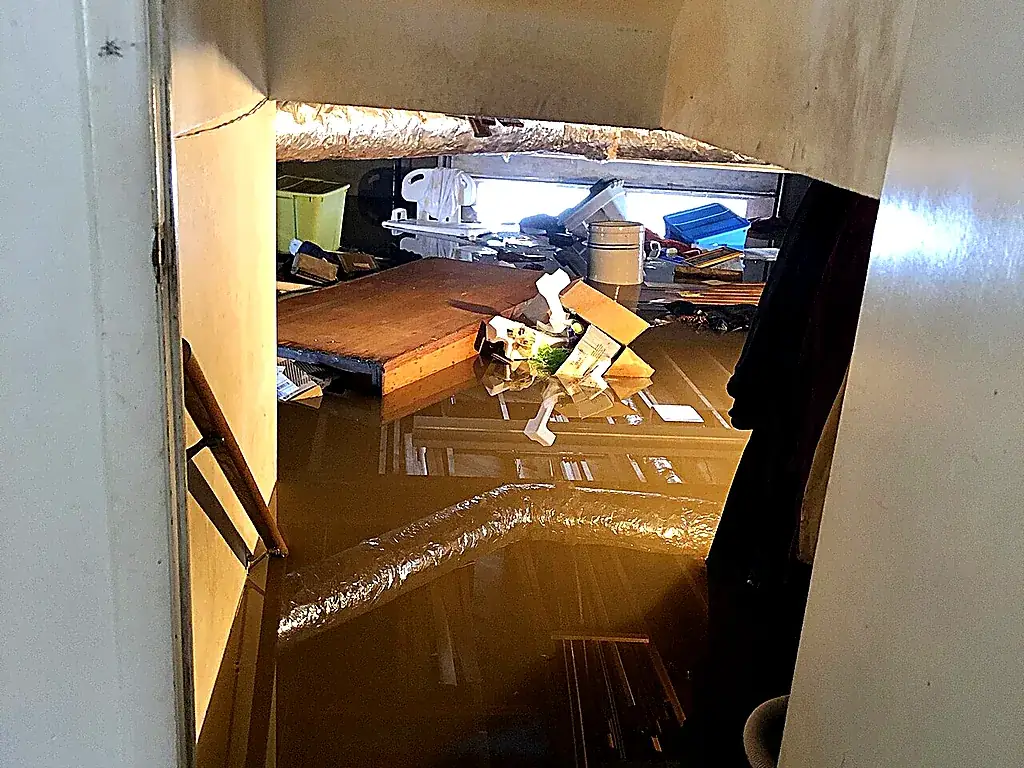
Basement flood cleanup, in short
Basement flood cleanup is the safe removal of water from a flooded basement, followed by disinfection where contamination is possible, removal of soaked porous materials, and structured drying of the slab, walls, and anything you store down there. In Cleveland — a city built on full basements — this is the single most common way heavy rain becomes a home disaster. Call (216) 438-9348 and we'll connect you with an independent provider who can extract, disinfect, and dry it properly.
The first day decides a lot. Water that's extracted and dried quickly usually stays a cleanup; water that sits becomes demolition. Here's how to think about each step.
Why Cleveland basements flood
Four forces, all common here:
- Combined sewers in heavy rain. Much of Cleveland and the older inner-ring suburbs was built with combined storm and sanitary sewers. When intense storms overload them, water backs up through basement floor drains and fixtures. Local reporting has documented exactly this in older neighborhoods after big storms — and the same infrastructure runs under much of the east side.
- Storm seepage. Saturated soil presses water through foundation cracks, window wells, and the joint where floor meets wall. In clay-heavy Northeast Ohio soil, this follows every sustained soaker.
- Sump pump failures. The pump that's saved you twenty times fails during the twenty-first storm — often with a power outage alongside it.
- Interior failures. Water heaters, laundry hoses, and furnace condensate lines all live in the basement. A $12 hose that lets go while you're at work empties a tank onto a finished floor.
Which one you have matters, because drain backups bring contamination — see our sewage backup guide if drains gurgled or water came up through them.
Before you step into the water
Electricity first. If outlets, appliances, or the panel are under water, don't enter — have the utility or an electrician cut power first. Same for any smell of gas. Property is replaceable.
Once power to the space is confirmed off and the water has stopped rising: wear boots and gloves, keep children and pets upstairs, and don't trust that "rain water" is clean once it's crossed a floor with drains in it.
What can be saved — and what usually can't
| Usually salvageable | Usually discarded |
|---|---|
| Metal, glass, and solid plastic items after cleaning and disinfection | Cardboard boxes, paper goods, and anything absorbent that took water |
| Washed clothing and linens (hot water, detergent) | Carpet padding — cheap to replace, nearly impossible to dry |
| Sealed wood furniture that dried fast | Particleboard and pressed-wood furniture that soaked |
| Concrete and tile floors after extraction and disinfection | Insulation and drywall bottoms that wicked water |
| Plastic storage totes and their contents, if sealed | Food, cosmetics, and medicine that touched floodwater |
Photograph everything before it's discarded — insurance documentation applies to what you throw out, not just what stays.
Finished vs. unfinished basements
An unfinished basement with a concrete floor and storage totes is the easier version: extract, disinfect, dry the slab, and sort contents. A finished basement is the expensive version — carpet, pad, drywall, trim, and sometimes hardwood or laminate over the slab. Drywall wicks water several inches above the water line, so baseboards and the lower wall often come out even when they look okay. Fast extraction is what keeps a finished basement from turning into a full remodel; once water has 48 hours in that assembly, materials that could have been dried in place start needing removal.
What a provider actually does
- Assessment. Source, category of water, depth, affected materials — documented with photos for you and your insurer.
- Extraction. Pumps for depth, extractors for carpet and surfaces; the more water removed here, the faster drying goes.
- Disinfection where needed. Rain water that crossed a floor with drains gets treated as potentially contaminated and cleaned accordingly.
- Removal. Soaked pad, drywall bottoms, and insulation come out with the water line marked.
- Structured drying. Air movers and dehumidifiers, with daily moisture readings until the slab and remaining materials hit dry standards — the phase covered in our structural drying guide.
- Deodorization and documentation. A basement should smell like a basement, not a storm; the provider closes out with records you can hand an adjuster.
Next-storm preparation
- Test the sump pump every few months — pour a bucket of water into the pit and watch it cycle.
- Add a battery-backup pump if the basement has history; storms that flood basements often knock out power.
- Extend downspouts well away from the foundation and keep gutters clear.
- Check window wells for debris and consider covers.
- Store irreplaceable items in sealed totes on shelving, not cardboard on the slab.
- Discuss a backwater valve with a plumber if drain backups are repeat visitors.
What drives cleanup cost
Depth, area, contamination, and finish level are the four big ones — a finished basement with carpeted stairs prices differently than two inches on bare concrete. Equipment days matter too: drying a saturated slab and framed walls takes longer than drying a floor. The provider you're connected with confirms scope and pricing after assessment; our homepage's cost-factors table covers the full list. Industry guidance commonly cites several days of drying for typical residential losses — never count on "it'll dry on its own."
Basement flood FAQs
Does insurance cover a flooded basement?
It depends on the source. Groundwater seepage and surface flooding are often excluded from standard policies; sewer and drain backups frequently require a specific endorsement; sudden interior failures like a water heater tank are treated differently again. Check your policy and confirm with your carrier — and document before cleanup either way.
How long does it take to dry a flooded basement?
Industry guidance commonly cites around three to five days of equipment drying for typical residential losses; saturated slabs, finished walls, or contamination can extend that. The provider measures daily and finishes when materials actually reach dry standards.
Can I just let the basement air dry?
Slow air-drying lets humidity soak the whole space, encourages mold on everything damp, and leaves slab moisture untreated for weeks. Extraction plus dehumidification does in days what open windows do poorly in a month.
Do I need to replace the drywall?
Drywall that wicked water usually gets cut at or above the water line and the wet section replaced — it dries poorly and loses strength. But that's an assessment call for the provider after measuring, not a given for every foot of wall.
Is it safe to run my furnace or water heater after a flood?
Not until they've been inspected — appliances that sat in water can short, and gas components can be damaged. Have them checked before restarting; most utilities and HVAC companies treat flooded equipment seriously.
When should I call a professional?
When water covers more than a small patch, when it came through drains, when the power situation is unclear, or when valuable or finished space is involved. Call (216) 438-9348 and we'll connect you with an available independent provider — early calls consistently cost less than late ones.
Related help
If the water came through drains, treat it as contamination and read our sewage backup cleanup guide. For water that's still rising, it's emergency water removal first. East-side basements in older housing — Hough and its neighbors — see the combined-sewer version of this problem most. And for the full picture of how our referral works, start at the Cleveland water damage specialists homepage.
Next step: water in the basement doesn't wait for a convenient day. Call (216) 438-9348, describe what you're seeing, and we'll connect you with an available independent provider.