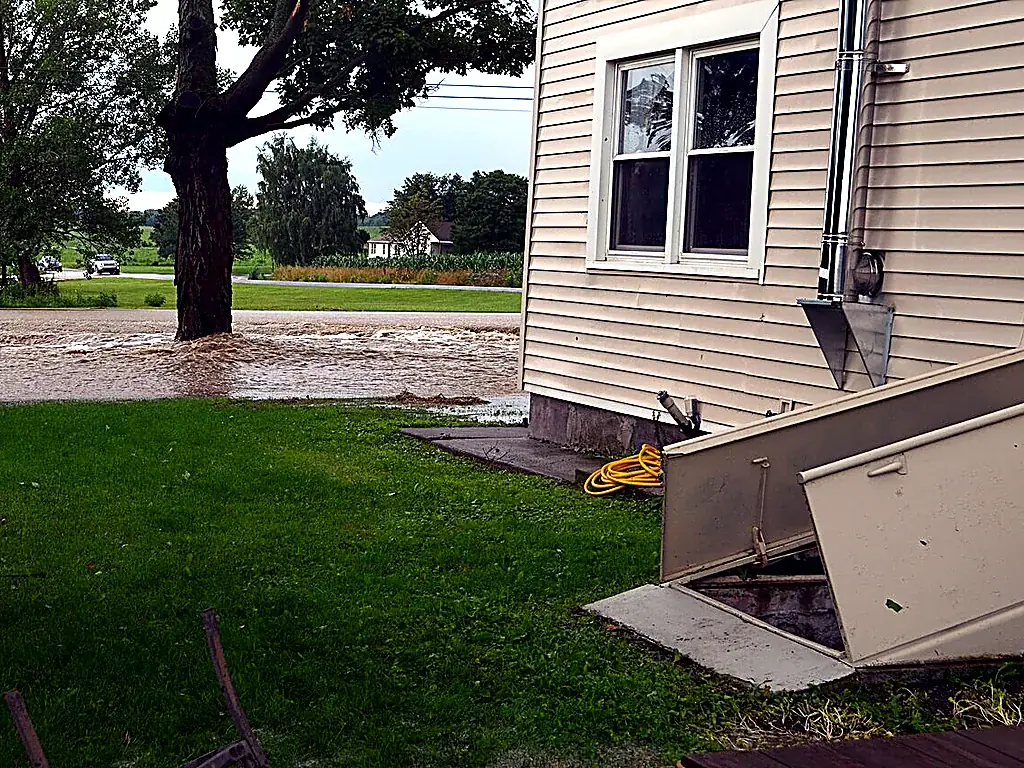
Sewage backup cleanup, in short
Sewage backup cleanup is the professional handling of Category 3 water — the most contaminated category — and it means protective equipment, extraction, removal of porous materials that absorbed it, disinfection, and structured drying. This is not a bleach-and-a-mop job: sewage carries bacteria, viruses, and parasites that stay hazardous on surfaces and in the air. If drains backed up into your Cleveland basement, keep everyone out of the area and call (216) 438-9348 — we'll connect you with an independent provider equipped for Category 3 work.
What "Category 3" actually means
Restoration professionals sort water damage into three categories:
- Category 1 — clean water. From a supply line or water heater tank; no meaningful contamination.
- Category 2 — gray water. From dishwashers, washing machines, showers; significantly contaminated.
- Category 3 — black water. Sewage, rising floodwater from outside, or any water that's been standing long enough to become unsanitary. It carries pathogens and organic waste and is treated as a health hazard, not a cleaning problem.
The risks are real but manageable with the right approach: bacteria and viruses from fecal contamination, mold spores taking advantage of the moisture, and — most acutely — higher danger for children, older adults, anyone immunocompromised, and anyone with an open cut. That's why the response is about containment and removal, not fragrance.
Why this keeps happening in older Cleveland neighborhoods
Cleveland's plumbing history is the reason. Much of the city and the older inner-ring suburbs was built with combined sewers — one pipe carrying both stormwater and sewage. In ordinary weather, they cope. In intense rain, they don't: the system fills, and water backs up through basement floor drains, showers, and toilets. Local reporting has documented these backups repeatedly in older neighborhoods after heavy storms, and tree roots working into old clay laterals make the same lines easier to clog even in dry weather.
The practical consequence: if your home is in an older part of Cleveland — Slavic Village, Hough, Glenville, East Cleveland and similar east-side streets — a heavy rain and a basement backup can arrive together, and the water that arrives is Category 3 by definition.
Do this — and don't do that
Do:
- Keep people and pets out of the affected area entirely.
- Turn off HVAC fans and systems that could pull contaminated air through the house, if the controls are safely reachable.
- Stop using water in the house — no laundry, dishes, showers, or flushing — so you don't add to the backup.
- Photograph the scene from the doorway for insurance documentation.
- Ventilate later, on the provider's advice, after contamination sources are controlled.
Don't:
- Don't attempt cleanup with a shop vacuum — it aerosolizes contamination and ruins the machine.
- Don't mix cleaning chemicals; bleach plus ammonia products creates toxic gas.
- Don't walk through the area and track contamination through the house.
- Don't save food, medicine, or cosmetics that touched the water — discard them.
- Don't assume a dried-out basement is a clean one; contamination without disinfection lingers.
What professional cleanup involves
- Containment and PPE. Crews suit up, and often seal doorways to keep contamination from migrating through the house.
- Extraction. Standing sewage and contaminated water are removed with dedicated equipment.
- Removal of porous materials. Carpet and pad, drywall bottoms, insulation, and anything absorbent that took sewage typically come out — they can't be reliably disinfected.
- Washing and disinfection. Remaining surfaces are cleaned and treated with EPA-registered disinfectants used per label directions — contact time matters.
- Structured drying. After cleaning, the space is dried with measured equipment use, the same way any water loss is dried.
- Clearance and documentation. Final moisture and cleanliness checks, plus records for you and your insurer.
What usually can't stay
- Carpet, pad, and area rugs that took sewage water
- Cardboard, paper goods, books, and soft toys
- Upholstered furniture and mattresses that absorbed water
- Food, opened beverages, cosmetics, and medications
- Insulation and drywall that wicked contamination
Hard, non-porous items — metal, glass, sealed wood, solid plastic — can usually be washed and disinfected. Photograph discards before they leave; insurers often want that record.
The insurance wrinkle
Sewer and drain backup coverage is frequently a separate endorsement on homeowner policies, not an automatic inclusion — and groundwater flooding is often excluded entirely. If backups have happened before, it's worth checking today what your policy actually includes. Document with photos before any cleanup, keep the provider's records, and confirm coverage questions directly with your carrier. We're a referral service, not an insurer, so treat all of this as orientation rather than coverage advice.
Reducing the odds of a repeat
- Ask a plumber about a backwater valve, which lets drains flow out but not back in — the standard fix for repeat backups.
- Keep the sump pump maintained and consider battery backup; some backups ride in on power outages.
- Never flush wipes, paper towels, or grease — they're the clog behind many backups.
- Manage tree roots near the lateral with a plumber's help if roots have been found before.
Sewage backup FAQs
Is it safe to stay in the house during a sewage backup?
Usually yes if you keep everyone out of the affected area, stop using water in the house, and turn off HVAC fans that could spread contaminated air. Children, older adults, and anyone immunocompromised should stay well clear. An active backup into living space is a good reason to arrange other lodging until cleanup and disinfection are done.
Can I clean a small sewage backup myself?
Professionals treat any sewage as Category 3 — gloves and a mop don't address what's in that water. The safe version of DIY is containment: keep people out, stop adding water, photograph, and call (216) 438-9348 so we can connect you with a provider equipped for it.
What has to be thrown away after a sewer backup?
Porous items that absorbed the water: carpet and pad, cardboard and paper, upholstered furniture, mattresses, food, medicine, and cosmetics. Hard non-porous items can usually be washed and disinfected. Photograph everything before discarding for insurance purposes.
Does insurance cover sewage backup cleanup?
Sewer backup coverage is often a specific endorsement rather than a standard inclusion, while groundwater flooding is frequently excluded. Check your policy and confirm with your carrier; documentation photos before cleanup support any claim.
How long does sewage cleanup take?
Extraction and removal often happen in a day; disinfection and structured drying add days more depending on how far water traveled and which materials were affected. The provider you're connected with lays out the timeline after assessment.
Why does the smell linger after cleanup?
Odor that outlasts professional cleanup usually means contamination remained somewhere — under flooring, inside a wall, in a drain line — or materials dried without disinfection. Ask the provider for a moisture and cleanliness clearance check; a properly cleaned and dried space shouldn't smell like the storm.
Related help
Sewage backups are the contaminated cousin of basement flooding — that guide covers the clean-rain version. After contaminated materials are out, structural drying finishes the job, and emergency water removal applies when water is still arriving. For how our referral service fits together, see water damage cleanup services in Cleveland on the homepage.
Next step: if drains came up in the last storm, treat the space as off-limits and make one call: (216) 438-9348. We'll connect you with an independent provider equipped for Category 3 cleanup.