The city, for water's sake
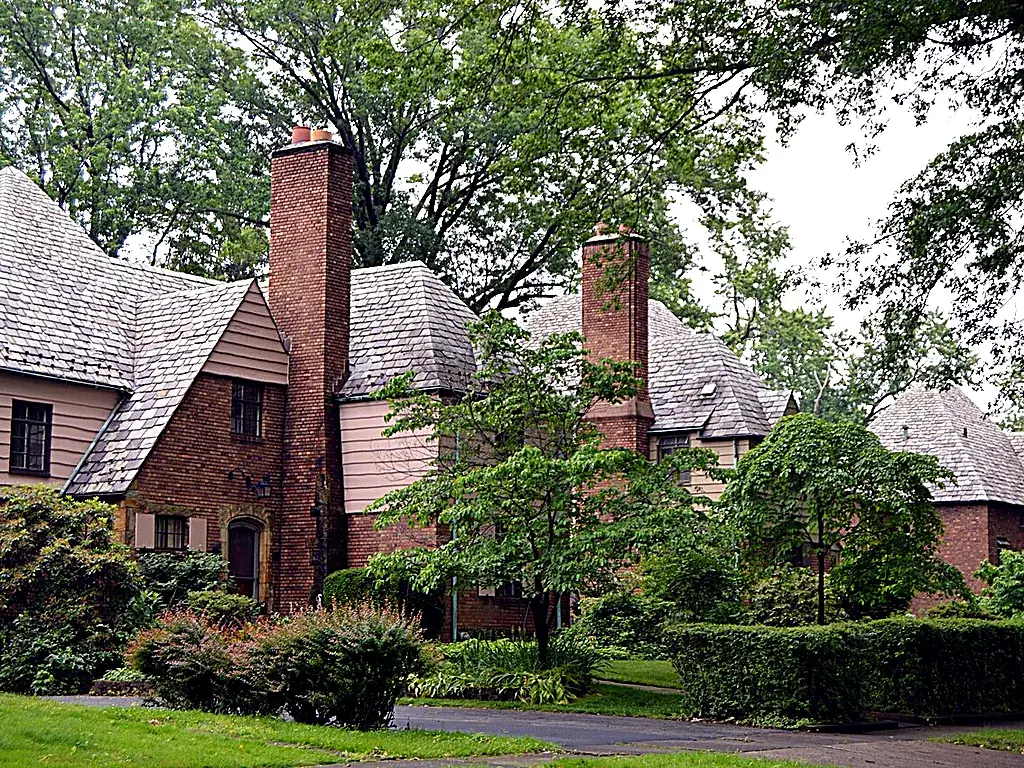
East Cleveland is its own city on Cleveland's eastern border — and one of Northeast Ohio's oldest streetcar suburbs. Its housing stock largely predates 1930, including the historic Forest Hill area developed on the former Rockefeller family estate. That heritage matters for water damage for a simple reason: homes of this era run on plumbing systems that are, in many cases, original. Galvanized steel supply lines well past their design life, cast-iron drains of similar vintage, full basements, and mature trees whose roots have spent a century finding the sewer laterals.
Old plumbing doesn't fail gracefully — galvanized lines tend to go from "fine" to "weeping inside a wall" to "burst" with little middle ground. That's why residents here benefit from two habits: knowing where the main shutoff valve is, and treating new stains and smells as findings, not decorations. We help connect East Cleveland residents with independent restoration providers who work on homes of this era, from finding hidden leaks to cleaning up after freeze breaks.
Common water problems here
- Galvanized supply failures. Corroded steel lines develop pinholes that soak wall cavities and subfloors quietly — the leak you find by stain instead of sound.
- Drain overflows from root intrusion. Old laterals plus mature trees equals slow drains that become basement overflows in heavy rain.
- Storm backups. Older combined sewers serving parts of the area can push water back through basement drains during intense rain.
- Water heater and boiler failures. Basement utility rooms hold the equipment; a failed tank soaks exactly where the storage is.
- Freeze events. Older homes with less-insulated runs take freeze–thaw winters personally — burst pipes spike in every deep cold.
What to do first when water shows up
- Electricity before entry. If the panel or any appliance is wet or submerged, stay out until power is confirmed off.
- Know that in pre-1930 homes, "small" leaks are rarely small. Water travels plaster lath and old subfloors broadly; what looks like a two-foot stain often means a wet wall cavity. Professionals measure with meters rather than guess.
- Shut off and document. Main valve for supply failures; dated photos of everything before moving or discarding.
- Call (216) 438-9348. We'll connect you with an available independent provider for 44112 — extraction and measured drying are what save plaster walls and original trim.
Nearby communities we serve
- Cleveland Heights
- Nottingham
- Glenville (44108)
- Forest Hill
- University Circle (44106)
Sister guides: Glenville to the west and Cleveland Heights to the south.
Planning repairs in an older home
Drying a pre-1930 house is one project; putting it back together well is another. A few notes that save East Cleveland homeowners money and headaches. Plaster that survived — measured dry, solid, unstained — is worth keeping, and professional moisture readings are what justify keeping it; wholesale plaster-to-drywall conversion is rarely the necessary answer to one burst pipe. Trim and millwork that came out for access should be labeled and saved during removal; restoration providers who work on older housing usually handle this naturally, and it's a fair question to ask when you're connected. Where replacements are needed, documenting what was removed — photos, the removed pieces themselves — supports both insurance claims and the eventual rebuild. And when the walls are open anyway for drying access, it's the efficient moment to deal with the pipe that caused all of this: a plumber can replace the failing galvanized section properly instead of patching a symptom. Ask the provider you're connected with to coordinate timing with the plumber; open-wall time is precious, and it's cheaper to run new pipe through an open wall than to open a finished one twice.
East Cleveland water damage FAQs
Do you serve East Cleveland and 44112?
Yes — East Cleveland and the surrounding 44112 area are part of the Greater Cleveland coverage we help route calls across. Call (216) 438-9348 with the property address and we'll identify an available independent provider covering it.
Are pre-1930 homes harder to dry out?
Different, not harder. Plaster, lath, and old lumber behave differently from modern drywall — plaster can often be dried in place if drying starts early, while saturated lath sometimes needs opening. Providers measure first and remove only what the readings justify.
Why do old galvanized pipes fail suddenly?
Galvanized steel corrodes from the inside out; decades of buildup narrow the pipe and pit its walls until a weak spot gives way — often at a joint, often during a pressure change or freeze. The failure looks sudden from outside the wall; it's been developing for years.
Does insurance cover water damage in older homes?
Coverage follows the cause more than the age: sudden events like burst pipes are typically treated differently from gradual leaks and long-term seepage, and policies vary widely. Confirm with your carrier, and document with dated photos before any cleanup.
What should I have ready when I call?
The address, where the water is or was, whether it's still active, when it started, and anything electrical involved. If you know the plumbing is original, say so — it helps the provider bring the right expectations and equipment.
Next step
In a neighborhood where the plumbing may be as old as the streetlights, the winning moves are prevention and speed: know the shutoff, respect new stains, and call early. (216) 438-9348 connects you with an available independent provider for extraction, measured drying, or burst pipe cleanup. For the full service picture, see greater Cleveland water damage response on our homepage.