Water leak detection, in short
Water leak detection is the process of locating the source of hidden moisture — inside walls, under floors, beneath slabs — using moisture meters, thermal imaging, acoustic listening, and pressure testing, usually without opening anything up first. A stain on the ceiling is a symptom; detection finds the disease. If your Cleveland home has a mystery stain, a musty smell, or a water bill creeping upward, call (216) 438-9348 and our team will find the source before it becomes a flood.
Early detection is the cheapest water damage service there is — the difference between drying a wall and rebuilding one usually comes down to how soon someone looked for the leak.
The signs a leak is hiding
Hidden leaks announce themselves quietly. Watch for:
- Stains that grow, fade, and return — a ceiling or wall patch that repainted over keeps coming back because the water never stopped.
- Paint and wallpaper failing — bubbling, peeling, or flaking with no other explanation.
- Floors that changed — cupping hardwood, lifted laminate seams, or a tile floor with a hollow-sounding spot.
- The musty smell — especially in basements, closets, and under sinks; dampness you can't see often announces itself by nose first.
- Mold in odd places — not the shower corner, but baseboards, wall corners, or the ceiling near an upstairs bathroom.
- A warm spot on the floor — the classic sign of a hot-water slab leak.
- The sound of running water with every fixture off, or a water meter that never quite stops.
- The creeping bill. Usage climbing without a change in habits is often the first measurable clue.
Why older Cleveland homes are leak magnets
The region's housing stock writes a lot of this page. Pre-1940 homes — plentiful in Cleveland Heights, East Cleveland, and the east-side neighborhoods generally — were plumbed in galvanized steel, a material with a service life that many lines have now far exceeded. Corroded galvanized pipe develops interior roughness, then pitting, then pinhole leaks that weep for months. Aging copper develops its own pinholes; cast-iron drains crack and separate; decades of freeze–thaw cycles stress every joint in the system. None of this means every older home has a problem — it means the probability of a slow, hidden leak is higher, and paying attention to the signs above matters more.
Two safe checks you can do today
Neither tells you where a leak is — only whether one exists. Both are free and safe:
- The meter test. Turn off every water-using thing in the house — fixtures, appliances, ice maker, irrigation. Find your water meter and note the reading (or photograph it). Wait one to two hours without using any water, then check again. Movement means water is going somewhere it shouldn't.
- The toilet dye test. Remove a toilet tank lid, add a few drops of food coloring, and wait 15–20 minutes without flushing. Color appearing in the bowl means the flapper is leaking — one of the most common silent water wasters in any home.
Professional tip: do the meter test at bedtime and read the meter first thing in the morning. Eight silent hours make even a slow leak obvious.
How professionals find the leak
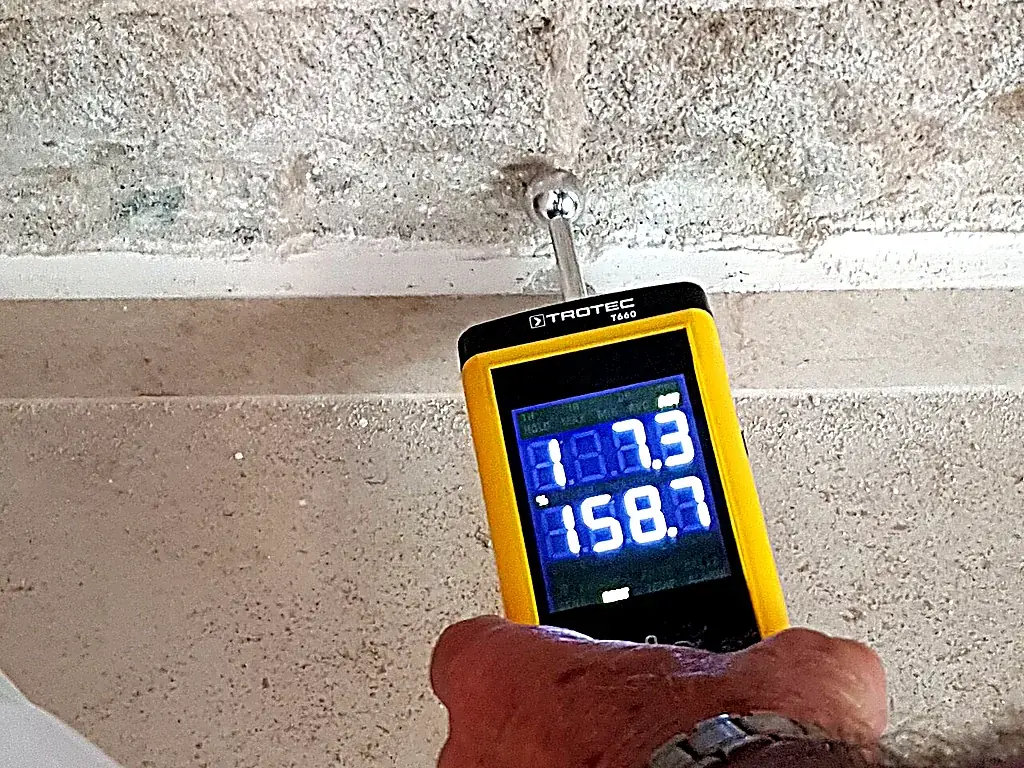
- Moisture mapping. Pin and pinless meters trace moisture patterns across walls and floors — the wet path usually points back toward the source.
- Thermal imaging. Infrared cameras spot the cool patches where water is evaporating (or the warm line of a hot-water leak) behind surfaces.
- Acoustic listening. Sensitive ground microphones and correlation equipment hear the hiss of pressurized water escaping — especially useful for supply lines under slabs and yards.
- Pressure isolation. Closing sections of plumbing one at a time while watching the meter narrows the leak to a specific run.
- Tracer gas. In stubborn cases, a safe inert gas mix is fed into the pipe; a detector sniffs out where it escapes.
The goal is always the same: locate first, open second. Exploratory demolition happens only when it's the fastest honest way to confirm what the instruments already suspect.
A note on slab leaks
A slab leak is a supply-line leak under the concrete foundation. The warning signs are specific: warm floor spots, the sound of water with everything off, unexplained humidity, carpet that feels damp near an exterior wall, and cracks in tile or slab. They're serious not because the water is dramatic but because it's invisible — quietly eroding the subgrade and feeding moisture into floors and walls for months. If those symptoms sound familiar, detection is urgent rather than optional.
What happens after the leak is found
Detection ends with a location and an explanation; then the sequence runs in order. A plumber repairs the pipe or fitting. If the leak has been feeding materials for a while, a restoration provider measures the damage: extraction if there's standing water, drying of the wet assembly, and cleanup of any mold that got a head start — the phases covered in our structural drying guide. If a slow leak ever turns sudden — a weeping fitting that lets go — that's emergency water removal territory, starting with your main shutoff valve.
What drives detection cost
- Complexity of the hunt — an obvious bathroom supply leak finds itself; a slab leak may take several methods in one visit.
- Access — finished ceilings, tiled walls, and built-ins cost more to investigate than open basements.
- Equipment needed — thermal imaging and acoustic work price differently than a visual inspection.
- Openings required — the fewer exploratory holes, the lower the repair bill afterward.
On insurance: policies often treat the repair of the leak and the damage the water caused differently — many cover resulting damage while excluding the pipe fix itself. Check your policy before assuming; the provider's documentation helps either way.
Water leak detection FAQs
How do I know if I have a hidden water leak?
The usual tells: stains that return, peeling paint, musty smells, warped floors, mold in odd places, the sound of running water with fixtures off, and a water bill that climbs without explanation. The meter test — everything off, watch the meter for an hour or two — confirms whether water is moving when it shouldn't.
What is the water meter test?
Shut off all water use, record the meter reading, wait one to two hours with zero water use, then re-read. Any movement indicates a leak somewhere in the system. It confirms that a leak exists — professional detection finds where.
How do professionals find leaks without tearing open walls?
Moisture mapping traces the wet path, thermal cameras see evaporative cooling behind surfaces, acoustic equipment hears pressurized water escaping, and pressure isolation narrows the search to a specific pipe run. Openings happen only to confirm what instruments indicate.
Is a slab leak serious?
Yes — it's invisible by nature and can feed moisture into floors and the foundation for months. Warm floor spots, water sounds when everything is off, and unexplained humidity are the signs to act on quickly.
Will insurance cover leak detection?
It varies: some policies treat detection differently from the repair, and both differently from resulting water damage. Check your policy and ask your carrier; the provider's written findings and photos help whatever the answer is.
How long does leak detection take?
Simple cases can resolve in a single visit; complex slab or multi-branch hunts can take longer. Call (216) 438-9348 and we'll connect you with an independent provider who'll tell you what your situation looks like after the first instruments come out.
Related help
Once a leak is found, structural drying handles what it soaked, and emergency water removal applies if it ever turns sudden. Homes in Cleveland Heights and East Cleveland carry the older-plumbing version of this risk. For the complete picture, start from the start-to-finish water damage restoration overview on our homepage.
Next step: that stain won't fix itself and neither will the pipe behind it. Call (216) 438-9348 and we'll connect you with an available independent provider to find it — before it finds your floor.