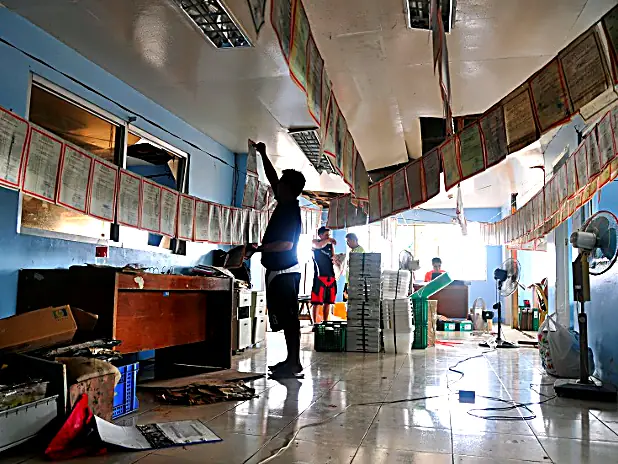
Contents restoration, in short
Contents restoration is the professional cleaning, drying, and deodorizing of the things a flood soaked — furniture, textiles, documents, electronics, and keepsakes — alongside the structural work. The structure gets dried; your belongings get rescued. Call (216) 438-9348 and our team triages everything room by room.
The save-vs-toss rules
- Hard and non-porous saves well. Metal, glass, sealed wood, and solid plastic clean and disinfect reliably.
- Porous rarely does. Mattresses, upholstered furniture, cardboard, books, and stuffed items that took contaminated water usually don't — health wins over sentiment for Category 2 and 3 water.
- Speed decides. Items dried within a day or two have far better outcomes than items left wet for a week.
- Clean water changes everything. A supply-line soak is a drying problem; a sewage soak is a disposal problem.
The restoration process
- Room-by-room triage and inventory. Every item photographed, categorized, and logged — the record your claim runs on.
- Move and secure. Salvageable items move to a clean, dry area; the pack-out option takes them to a facility for full treatment.
- Cleaning and drying. Specialized drying chambers, cleaning methods by material, and deodorization.
- Return and placement. Items come back cleaned, documented, and ready for the finished rooms.
Photographs and documents
Wet photos and paper documents can often be saved with careful handling: air-dry slowly, never stack wet prints, and freeze what can't be treated immediately to stop deterioration. Professional document drying exists for large volumes. Irreplaceable items deserve the professional route — attempt-and-ruin is worse than hand-off-and-save.
Contents FAQs
Is it worth restoring, or should I just replace?
The inventory answers it: sentimental items get professional effort regardless of price; high-value items get documented for the claim; low-value porous items get replaced. The triage makes the economics clear.
Does insurance cover contents?
Personal property coverage exists in most policies, with limits for certain categories (jewelry, electronics). The itemized inventory with photos is what gets contents claims paid properly.
Electronics that got wet — can they be saved?
Don't power them on. Professional electronics restoration dries and cleans them before testing — powering on wet causes the corrosion that kills them.
What about items that touched sewage water?
Porous items that took Category 3 water are disposed of for health reasons — non-negotiable. Hard non-porous items disinfect well. When in doubt, ask the crew during triage.
How long does a pack-out take?
Item-dependent — days for simple cleaning, weeks for chamber drying and document work. The inventory gives you a timeline per item.
Related help
Contents ride alongside every service: emergency extraction, structural drying, and sewage cleanup set the contamination rules. All services: water damage restoration in Cleveland.
Next step: the sooner belongings are triaged, the more comes back. Call (216) 438-9348 and our team responds.